Wellness Lantern

Fever: Choosing the Right Level of Care

The thermometer reading matters less than age, how long it has lasted and what else is happening — here is how those three things point to a venue.

Table of contents
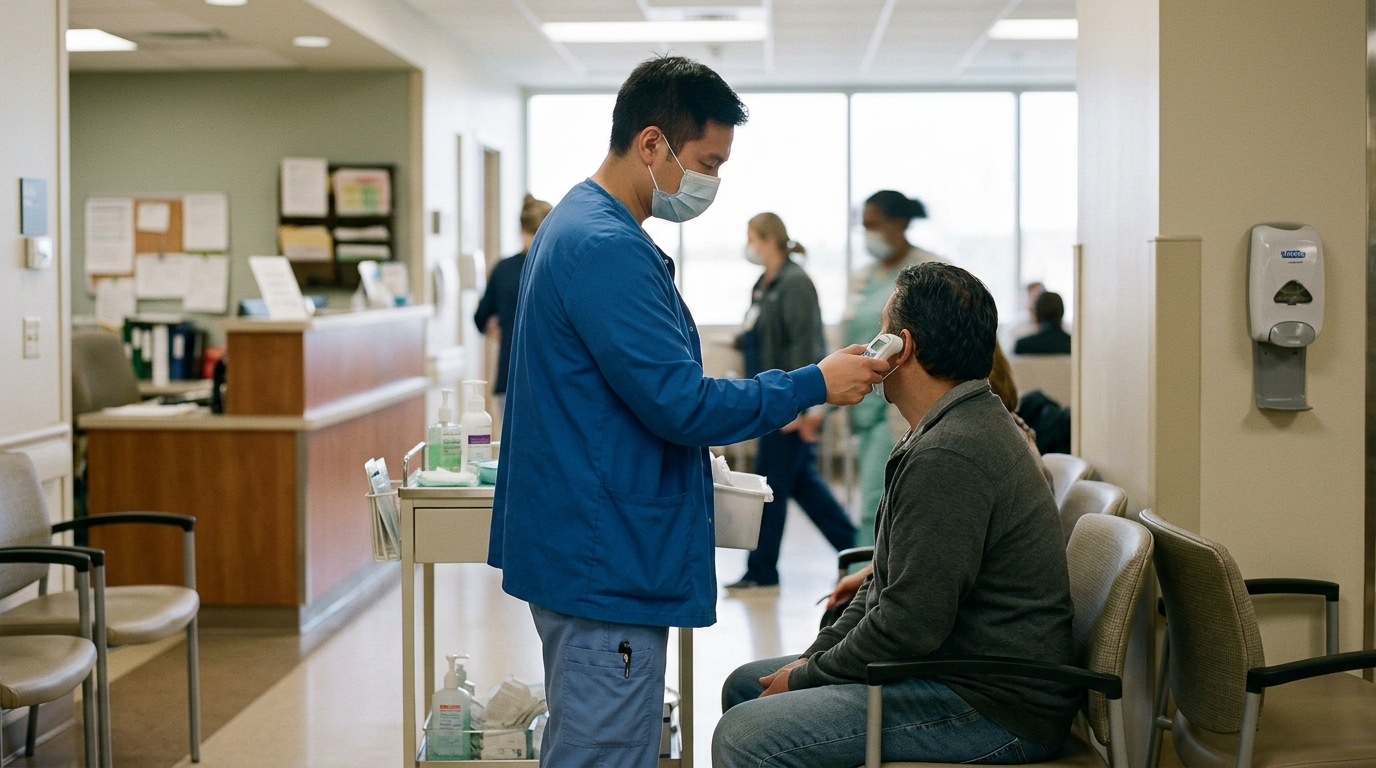
Featured image for "Fever: Choosing the Right Level of Care"

A fever is your body reacting to something: a viral infection, a bacterial one, a reaction to a medicine or vaccine, heat exposure, or an inflammatory condition. The number on the thermometer does not name the cause, so the decision about where to go rests on three other things — the age of the person, how they look and act, and how long it has lasted.

Use the table to match what you can observe to a venue, then use the steps if you need to decide quickly while someone is sick in front of you.

Where to Go, Based on Your Symptoms

Where to goWhen it appliesTypical waitWhat to expect
Call 911Fever with a seizure, difficulty breathing, blue lips, tongue or nails, confusion, not waking easily, crying that cannot be calmed, a very bad headache, stiff neck, refusal to walk or to move an arm or leg, or new rash or bruises (MedlinePlus, National Library of Medicine, undated).Dispatch is immediate and the call-taker stays with you.Paramedics check temperature, breathing, pulse and blood sugar at the scene and begin treatment on the way.
Emergency room (you drive)Rectal temperature of 100.4°F or higher in an infant under 3 months (MedlinePlus and Mayo Clinic, both undated); fever over 105°F that does not come down with treatment or leaves the person uncomfortable (MedlinePlus); adult fever of 103°F or higher with severe headache, confusion, stiff neck or difficulty breathing (Mayo Clinic); fever during cancer treatment or with a transplant or immune condition.Order is by severity, not arrival. CDC/NCHS survey data for 2021 found 41.8% of emergency visits had a wait under 15 minutes; an NCHS data brief found 81% of visits by children aged 0–17 were seen within 30 minutes in 2020.Vitals and a temperature at triage, then possibly blood or urine tests, imaging or fluids.
Urgent careModerate-grade fever (100.6–102.2°F, Harvard Health Publishing, undated) in an adult with sore throat, ear pain, cough or painful urination, none of the danger signs above, and no same-day primary care slot; a fever that has run past 3 days.In an Urgent Care Association 2023 survey, most respondents said most patients wait 11–20 minutes (47.1%).Exam, rapid swabs or a urine test, and a transfer or referral to an ER if they find something beyond their scope.
Primary care office (call today)Adult temperature of 103°F or higher with no danger signs (Mayo Clinic, undated) or over 104°F (Harvard Health Publishing, undated); child 3 to 12 months with a fever of 102.2°F or higher — MedlinePlus advises contacting the provider or going to the ER; fever that returns after a well day; fever with a chronic illness.Same-day sick visits are common; after hours, most offices have a nurse line that triages by phone.They know your history and medicines, can examine ears, throat, chest and urine, and can order tests.
TelehealthLow-grade fever (99.1–100.4°F, Harvard Health Publishing, undated) for under 3 days, with mild cold symptoms, in someone alert, drinking and breathing normally, when you have a thermometer reading to report.Often within the hour on an on-demand platform.A video history, a look at throat and skin, advice on what to watch for, and clear instructions on when to escalate.

How to Decide in the Moment

  1. Look at the person before you look at the thermometer. Seizure, trouble breathing, blue lips, tongue or nails, confusion, hard to wake, stiff neck, very bad headache, refusal to walk or move a limb, or new rash or bruises: call 911 and stop here (MedlinePlus, National Library of Medicine, undated).
  2. Check the age. A baby under 3 months with a rectal temperature of 100.4°F or higher needs to be contacted in to a provider or taken to the emergency room now (Mayo Clinic, undated). Waiting until morning means a newborn infection can progress before anyone has tested for it.
  3. Take a real temperature and note the method and time. A child has a fever at 100.4°F rectally, 99.5°F orally or 99°F under the arm; an adult probably has one above about 99°F to 99.5°F orally (MedlinePlus, undated).
  4. Count the days. A fever that has run past 3 days warrants a visit rather than more waiting — not because day four is dangerous in itself, but because a treatable cause such as an ear or urinary infection stays unidentified while you wait.
  5. Ask what else is wrong. Severe pain anywhere, trouble breathing, confusion, loss of consciousness or a stiff neck means immediate care, whatever the number (Harvard Health Publishing, undated).
  6. If you are still unsure after those five, call your primary care office's nurse line. Describing it out loud to someone trained to triage is faster than deciding alone.

What to Say When You Call or Arrive

Give the number, the method, the clock and what you can see. Leave the cause to them.

Calling 911

Open with location, age, and the thing that made you call

"I need an ambulance at 12 Oak Street, apartment 3. My daughter is 4. Her temperature was 104.1 rectally ten minutes ago, the fever started this morning, and she just had a shaking episode that lasted about a minute. She is breathing but not responding to me normally."

Calling a triage nurse or urgent care

Onset, severity, duration, in that order

"The fever started Tuesday evening, so about three days. The highest reading was 102.8 by mouth last night. Right now it is 101.4, taken fifteen minutes ago, two hours after fever-reducing medicine. He is drinking, urinating about half as often as usual, and complaining of ear pain on the right."

Arriving at an emergency room desk

Lead with the threshold that brought you

"He is 7 weeks old. His rectal temperature was 100.6 twenty minutes ago. It is his first fever, and he has fed twice today instead of six times."

If a clinician asks what has changed

Describe the change, not a label

"Until noon she was awake and talking. Since then she has not been able to tell me where she is, and she keeps holding the back of her neck."

Bring a list of current medicines, any chronic conditions, recent travel, and the time of the last dose of anything you gave.

Frequently asked questions

Will urgent care send me to the ER anyway and leave me paying twice?

It can happen: urgent care centers treat and test, but they transfer anyone who needs imaging, IV care or admission they cannot provide, and you may receive a bill from both. If the person already has a danger sign from the 911 list, skip the middle step and go straight to the emergency department.

Can an emergency department turn me away if I have no insurance?

Hospital emergency departments screen everyone who arrives, and registration happens alongside care rather than as a condition of it. You can still get a bill afterward, so ask the registration desk or a financial counselor about the hospital's financial assistance application before you leave.

How long will I actually wait in the ER with a fever?

It depends on how you are triaged, not when you arrived. CDC/NCHS survey data for 2021 found 41.8% of emergency visits had a wait of under 15 minutes, and an NCHS data brief found 81% of visits by children aged 0–17 were seen within 30 minutes in 2020 — but tell the triage nurse immediately if breathing, alertness or color changes while you are waiting. This guide does not replace an in-person evaluation by a clinician.

Sources

  1. MedlinePlus (National Library of Medicine)Fever in infants and children
  2. MedlinePlus (National Library of Medicine)Fever

Written by

Oyelaran Fitzgerald

Oyelaran focuses on movement for people who don't think of themselves as 'fitness people.' His pieces favor sustainable routines over dramatic transformations, and he's allergic to before-and-after photos.