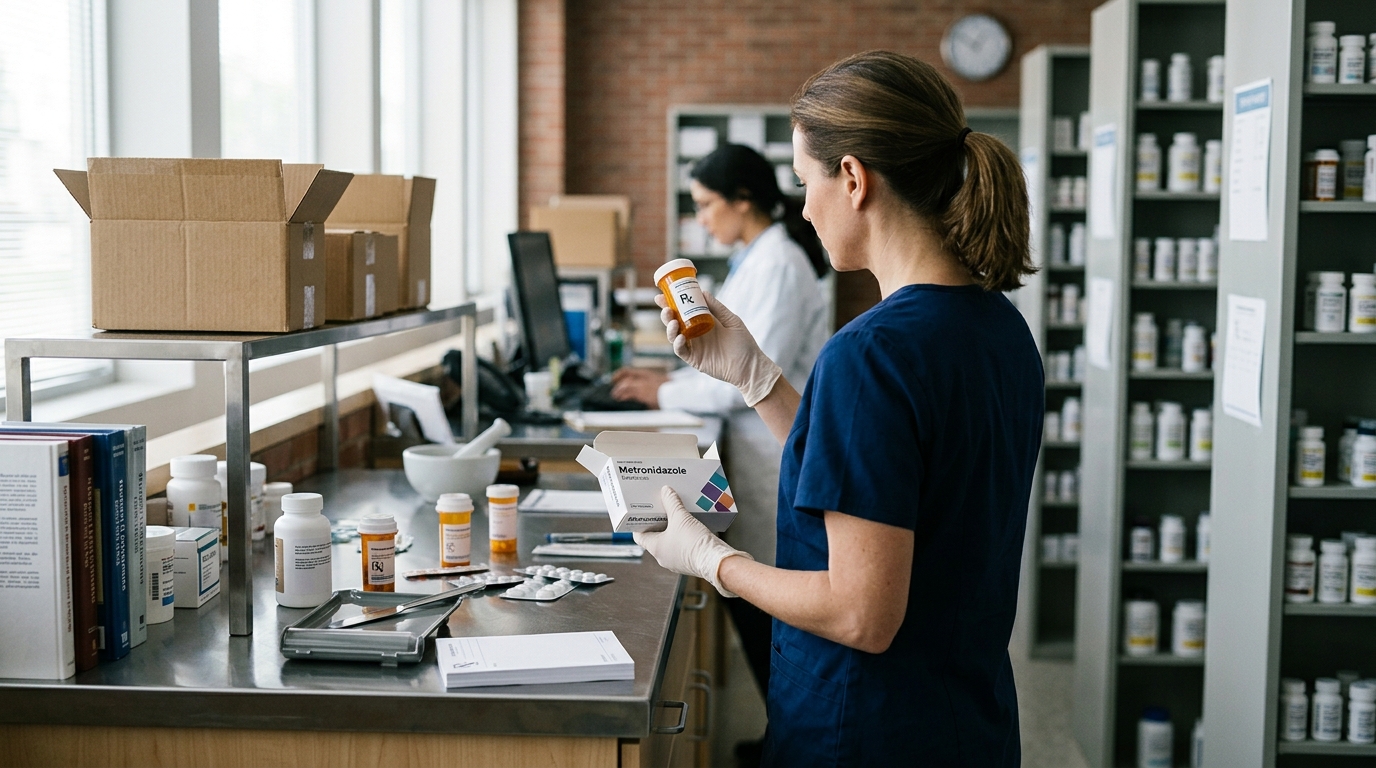
Product labeling tells you to keep alcohol away from this antibiotic during treatment and for a window afterwards, and the length of that window varies by form.
Metronidazole (Flagyl) is an antibiotic used for certain bacterial and parasitic infections, and it comes with one of the better-known alcohol warnings in pharmacy. US product labeling says not to consume ethanol or propylene glycol during treatment and for at least 24 hours after finishing (U.S. Food and Drug Administration, 2014), while other product information and health professionals advise waiting 3 days after the course ends (Drugs.com, undated).
The reaction people are warned about is uncomfortable rather than inevitable, and reports of how often it happens are inconsistent. Your prescriber or pharmacist can tell you which timing applies to the form you were given.
What Happens When They're Combined
Metronidazole is thought to interfere with the enzyme step that clears acetaldehyde, a breakdown product of alcohol, so acetaldehyde can build up instead of being processed — the same mechanism that makes disulfiram, a medicine used in alcohol treatment, produce its deliberate reaction to drinking. That is why the effect is described as "disulfiram-like" rather than as ordinary drunkenness.
In practice, the reported reaction involves abdominal cramps, nausea, vomiting, headaches and flushing (U.S. Food and Drug Administration, 2014). Older case literature also describes chest pain, vertigo, sweating, thirst, blurred vision, weakness, confusion and low blood pressure (Antimicrobial Agents and Chemotherapy, 2020). One death has been reported in association with this reaction (Drugs.com, undated).
It is worth knowing that the evidence is not tidy. The reaction occurs with uncertain frequency and varied severity, and data on whether metronidazole truly causes a disulfiram-type reaction are contradictory (Antimicrobial Agents and Chemotherapy, 2020). The labeled advice to avoid alcohol stands regardless. Separately, taking metronidazole alongside disulfiram, or within two weeks of it, is listed as a contraindication for the vaginal gel, and psychotic reactions have been reported when the two drugs were used together (U.S. Food and Drug Administration, 2014).
Signs Something Is Wrong
These are things to report, not conclusions to draw yourself:
- Facial flushing, warmth or sweating shortly after drinking — note when it started and tell your prescriber.
- Headache, nausea or stomach cramping. Headache is also a common side effect of the drug itself, reported in nearly 20% of people who take it (GoodRx, 2025).
- Repeated vomiting, or feeling too unwell to keep fluids down — call your doctor the same day.
- A rash, hives, itching or blistering or peeling skin: seek emergency care, and tell your doctor before taking the next dose rather than deciding alone (MedlinePlus, undated).
- Chest pain, fainting, confusion, seizures, slurred speech or loss of coordination: seek emergency care now (Antimicrobial Agents and Chemotherapy, 2020; MedlinePlus, undated).
Frequently asked questions
How long after my last dose do I have to wait before drinking?
There is no single number, and the difference is about the form of the drug rather than guesswork. US labeling says to avoid ethanol and propylene glycol during treatment and for at least 24 hours afterwards (U.S. Food and Drug Administration, 2014). For metronidazole injection and for the vaginal gel, labeling says at least 3 days after the final dose (MedlinePlus, undated), and product information and health professionals commonly advise 3 days after an oral course too (Drugs.com, undated). Ask your pharmacist which applies to your prescription.
Does the vaginal gel really count, since it isn't swallowed?
Yes — the same advice is given. People using metronidazole vaginal gel are told not to drink alcoholic beverages or use products containing alcohol or propylene glycol while using it and for at least 3 days after the final dose (MedlinePlus, undated).
What about mouthwash or cough syrup with alcohol in it?
The warning covers ethanol and propylene glycol in any product, not only drinks (U.S. Food and Drug Administration, 2014). Rather than dropping or swapping anything yourself, show your pharmacist the labels of what you use and ask which are fine to continue during your course.