Wellness Lantern

Osteopenia vs. Osteoporosis: What's the Difference?

Both words describe bone density measured by the same scan, on the same scale, but only one crosses the number doctors treat as a disease diagnosis.

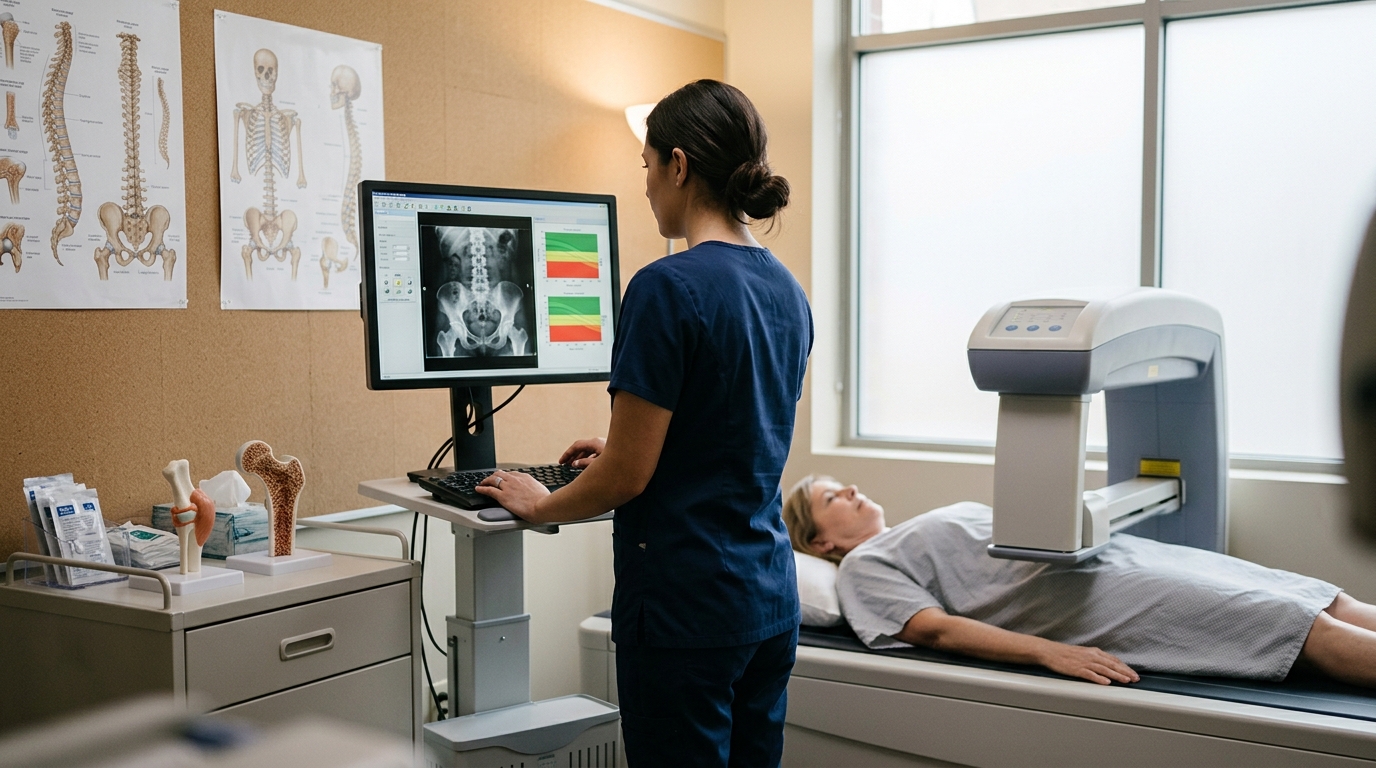
Featured image for "Osteopenia vs. Osteoporosis: What's the Difference?"

Osteopenia and osteoporosis sit on a single continuum of bone density. Osteopenia means your bone mineral density (the amount of mineral packed into your bones) is below the normal reference range but has not reached the cutoff that defines osteoporosis, a bone disease in which density, mass, or internal structure declines enough to raise the chance of fracture (National Institute of Arthritis and Musculoskeletal and Skin Diseases, NIH).

The same scan produces both results. What separates them is a number — and what your doctor does about that number depends on your age, sex, fracture history, and other risk factors.

Osteopenia vs. Osteoporosis

Osteopenia (low bone mass)Osteoporosis
What it isA reduction in bone mineral density below normal reference values that does not meet the criteria for osteoporosis (StatPearls, NIH, 2025)A bone disease in which bone mineral density and mass fall, or bone structure and strength change, increasing fracture risk (NIAMS, NIH)
The numberT-score between -1.0 and -2.4 (MedlinePlus, July 8, 2024); the World Health Organization definition is cited as -1.0 to -2.5 (StatPearls, NIH, 2025). A T-score is a standard-deviation score, not a lab value in mg/dLT-score of -2.5 or less (MedlinePlus, July 8, 2024)
What causes itBone loss outpacing bone rebuilding after peak bone mass, reached by about the third decade of life (StatPearls, NIH, 2025). Risk rises with age, female sex, thin or small-boned build, and race, with white and Asian women at highest risk (NIAMS, NIH)The same processes and risk factors, further along; it is the major cause of fractures in postmenopausal women and older men (NIAMS, NIH)
How it's diagnosedDual-energy x-ray absorptiometry (DXA) — a low-dose scan, usually of hip and spine (NIAMS, NIH)The same DXA scan; hip and spine DXA is generally considered the most reliable way to diagnose osteoporosis and predict fracture risk (NIAMS, NIH)
Which score is usedT-score (your density vs. a healthy young adult of your sex) if you are a postmenopausal woman or a man 50 or older; Z-score (vs. others your age, weight, sex, and ethnic origin) if you are premenopausal, a man under 50, or a child (MedlinePlus, July 8, 2024)Same rule — the score used depends on your age and sex, not on how low the result is
SymptomsMost people have none until a fracture occurs, often after minimal trauma (StatPearls, NIH, 2025)Often called a "silent" disease; many people have no symptoms until a bone breaks (NIAMS, NIH)
How it's typically treatedNutrition, exercise, and fall prevention; medication is recommended when the 10-year probability of hip or major osteoporotic fracture estimated by the Fracture Risk Assessment Tool (FRAX) is high, while low-to-moderate risk is approached differently (StatPearls, NIH, 2025)Same goals — slow or stop bone loss and prevent fractures — through nutrition, lifestyle, exercise, fall prevention, and medication (NIAMS, NIH). FDA-approved options include bisphosphonates such as alendronate (Fosamax) and calcitonin (Miacalcin)
Follow-upRepeat DXA can detect low bone density before osteoporosis develops and help predict fracture risk (NIAMS, NIH)Repeat DXA can also monitor whether ongoing treatment is working (NIAMS, NIH)

For either result, get same-day medical contact for sudden severe back pain after a minor fall, lift, or cough, or if you cannot put weight on a hip after a fall. Go to an emergency department for new leg numbness or weakness, or loss of bladder or bowel control, with back pain.

Why the Confusion Happens

The shared word is density — specifically, the single T-score that both conditions are defined by. One DXA scan produces one number, and that number lands you in one category or the other. There is no separate osteopenia test and osteoporosis test, so people reasonably assume the two words describe the same finding in different wording.

The names add to it. Both start with osteo-, meaning bone. -Penia means a deficiency or shortage; -porosis refers to bone that has become porous. Heard quickly in an exam room, "osteopenia" and "osteoporosis" differ by one syllable.

The cutoffs are also described slightly differently depending on the source you read. MedlinePlus (July 8, 2024) describes osteopenia as a T-score of -1.0 to -2.4 and osteoporosis as -2.5 or less, while the World Health Organization definition quoted in StatPearls (NIH, 2025) puts the osteopenia band at -1.0 to -2.5. A borderline score can look like it belongs to either label.

One more source of mix-ups: radiologists sometimes write "osteopenia" on a plain x-ray report to mean bones simply look thinner on the image. That is a visual impression, not a measured bone density diagnosis. Ask your doctor whether your label came from a DXA scan or from an x-ray comment.

Frequently asked questions

Does osteopenia always become osteoporosis?

This question is about osteopenia, the low-bone-mass result. MedlinePlus (July 8, 2024) describes a T-score in that range as a signal of possible risk for developing osteoporosis, not a guarantee it will happen. Your doctor can tell you how your own age, fracture history, and other risk factors change that picture.

Why was I offered medication when my score isn't low enough for osteoporosis?

That situation involves osteopenia rather than osteoporosis. StatPearls (NIH, 2025) notes that drug therapy is recommended for people with osteopenia who have a high 10-year probability of hip or major osteoporotic fracture as estimated by FRAX, while low-to-moderate risk is managed differently. Ask your provider which risk estimate was used in your case.

Will calcium, vitamin D, and exercise reverse it?

For osteoporosis, NIAMS (NIH) frames nutrition and exercise as part of slowing or stopping bone loss and preventing fractures, not as a cure; recommended intakes vary by life stage, for example 1,200 mg per day of calcium and 800 IU per day of vitamin D for people over 70. For osteopenia, the same measures are standard, and research cited by NIAMS indicates that in older adults exercise no longer increases bone mass but can improve muscle strength, coordination, and balance and lower the chance of falling. Your doctor or a registered dietitian can set targets for you.

Sources

  1. National Library of Medicine (MedlinePlus)Bone Density Scan: MedlinePlus Medical Test2024-07-08
  2. NCBI Bookshelf / StatPearls (NIH)Osteopenia - StatPearls2025-12

Written by

Oyelaran Fitzgerald

Oyelaran focuses on movement for people who don't think of themselves as 'fitness people.' His pieces favor sustainable routines over dramatic transformations, and he's allergic to before-and-after photos.