Wellness Lantern

Cataract Surgery Recovery Timeline

Most people see more clearly within days, but the eye keeps settling for weeks — here is what each stage looks like and which signs mean calling the same day.

Table of contents
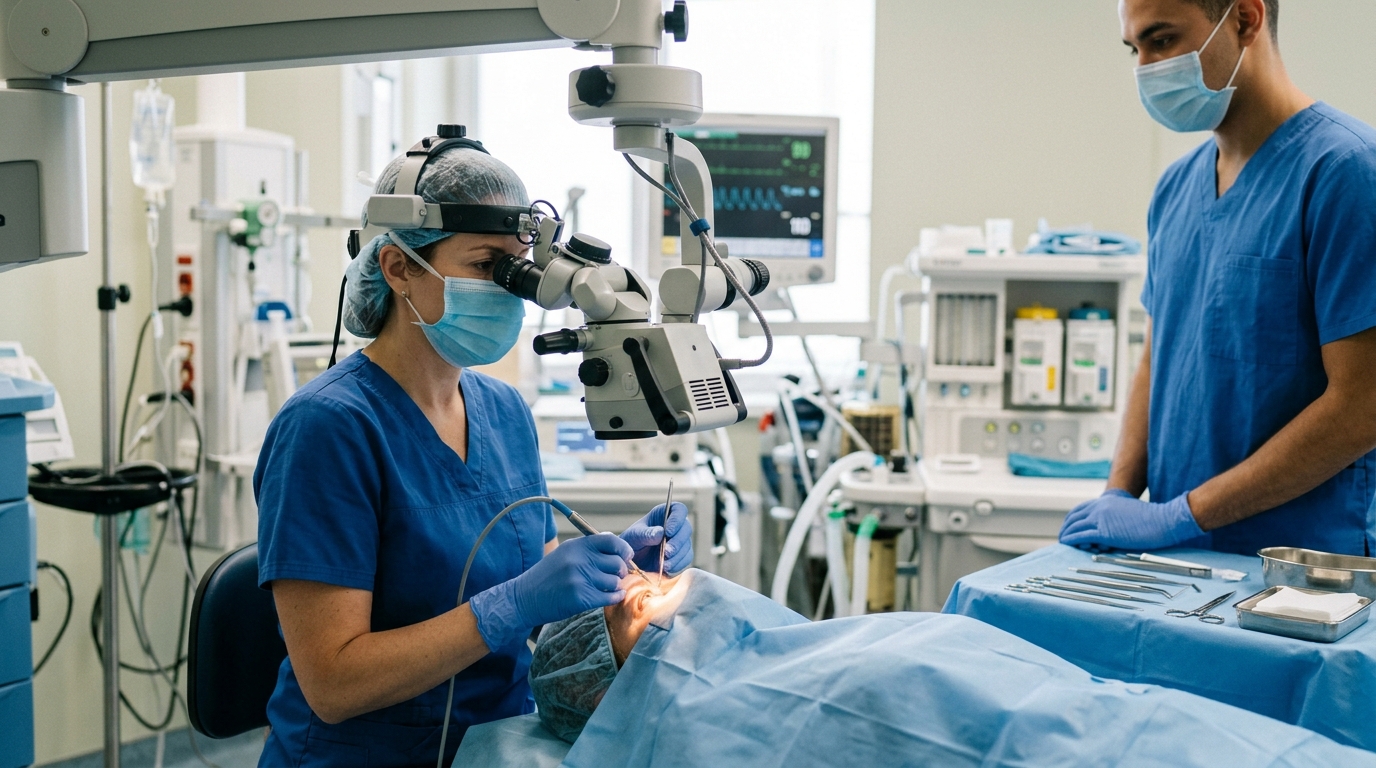
Featured image for "Cataract Surgery Recovery Timeline"

Cataract surgery is done as an outpatient operation, and the healing that follows is usually measured in days and weeks rather than months. MedlinePlus (NIH/NLM, 2025-07-24) describes recovery as taking about 2 weeks, the point at which new glasses or contacts can usually be fitted; the National Eye Institute (NIH, 2024-12-05) says most people are completely healed 8 weeks after surgery, and the American Academy of Ophthalmology (2022-08-18) notes it can take up to a year for the eyes to feel completely normal.

This guide walks through the first hours, the week-by-week milestones for work, driving and exercise, and the difference between symptoms that are expected and symptoms that mean picking up the phone. Your surgeon's own instructions always come first.

Immediately After the Procedure

Cataract surgery (an operation that removes your eye's clouded lens and replaces it with a clear artificial one) is an outpatient procedure — you do not have to stay overnight in a hospital, and the surgery itself lasts less than half an hour (MedlinePlus, NIH/NLM, 2025-07-24).

Adults are usually awake for it, with numbing eyedrops or a numbing shot — local anesthetic — plus medicine to help you relax, which is a form of moderate (conscious) sedation (MedlinePlus, NIH/NLM, 2025-07-24). That relaxing medicine is the reason the first hours are supervised.

Once the new lens is in place, you rest in a recovery area for about 15 to 30 minutes before you are ready to go home (American Academy of Ophthalmology, undated). Staff typically check that you are alert, steady on your feet, able to drink fluids, and not in significant pain. You may leave wearing a clear shield or a patch over the eye, and you will be given eyedrops — commonly an antibiotic and an anti-inflammatory — along with a schedule for using them. Which drops you get, and the dosing and timing of any pain reliever such as acetaminophen (Tylenol), are physician-directed.

You will need to have someone drive you home after cataract surgery (MedlinePlus, NIH/NLM, 2025-07-24). Arrange that driver before the day, not on it; most facilities will not discharge a sedated patient to a taxi or rideshare alone. Many ask that a responsible adult stay with you for the rest of the day — confirm your facility's rule with its pre-op nurse.

Vision is often blurry, filmy or oddly bright at first. Most people can resume reading, computer work and watching TV within several hours of surgery (American Academy of Ophthalmology, 2022-08-18). Patients usually have a follow-up exam with their doctor the day after surgery (MedlinePlus, NIH/NLM, 2025-07-24), so keep that appointment in your calendar and arrange a ride if you are told not to drive yet.

Recovery Timeline

These are general patterns. Protocols vary by surgeon, by facility and by your other eye conditions — confirm every interval below with your own care team.

First 48 hours

  • Do not bend over or put your head below your waist, and be gentle when sneezing or coughing (American Academy of Ophthalmology, 2022-08-18). That rules out floor-level chores, heavy lifting and toe-touching.
  • The eye may feel itchy, uncomfortable, or sensitive to light and touch; this should feel better after 1 or 2 days (National Eye Institute, NIH, 2024-12-05).
  • Work: screen and reading tasks are usually possible within several hours (AAO, 2022-08-18), but most people take the day of surgery off entirely.
  • Driving: not on the day of surgery — you need a driver home (MedlinePlus, NIH/NLM, 2025-07-24). Ask at your next-day exam when you meet your state's vision standard to drive again.
  • Exercise: walking and other very light exercise are usually fine from the day after surgery (AAO, 2022-08-18).

Days 1–3

  • You attend the day-after exam (MedlinePlus, NIH/NLM, 2025-07-24) and start or continue your drop schedule.
  • You can shower the day after surgery, keeping the stream of water from hitting the eye directly (AAO, 2022-08-18).
  • Work: many people doing desk-based work return within a few days once cleared; dusty, dirty or heavy-lifting jobs usually wait longer. Your surgeon sets the date.
  • Exercise: walking only. No biking, running, tennis or golf yet.

Week 1

  • Vision usually sharpens but can still fluctuate day to day.
  • Exercise and activity: biking, running, tennis, golf and sex should wait one week (AAO, 2022-08-18).
  • Warm compresses, lid scrubs and other dry-eye treatments are generally held until a week after surgery, because they can put pressure on the eye and introduce bacteria (AAO, 2022-08-18) — ask your ophthalmologist when to restart yours.

Weeks 2–4

  • Recovery takes about 2 weeks, and new glasses or contacts can usually be fitted at that point (MedlinePlus, NIH/NLM, 2025-07-24).
  • Swimming: wait two weeks before going in the water, to minimize the risk of infection and irritation (AAO, 2022-08-18) — pools, lakes and hot tubs alike.
  • If you have cataracts in both eyes, your doctor may suggest waiting at least 1 to 2 weeks between each eye's surgery (MedlinePlus, NIH/NLM, 2025-07-24).
  • Work and driving: most people are back to their usual routine in this window, once their surgeon confirms it.

Weeks 5–8 and beyond

  • Most people are completely healed 8 weeks after surgery (National Eye Institute, NIH, 2024-12-05).
  • Most people resume normal activities within days or weeks, but it can take up to a year for the eyes to feel completely normal (AAO, 2022-08-18).
  • Keep every scheduled follow-up, even if your vision feels settled.

Normal vs. Concerning Recovery Signs

Expected after cataract surgeryCall your eye doctor the same dayEmergency — ER or 911
Itching, mild discomfort, or sensitivity to light and touch that eases after 1 or 2 days (National Eye Institute, NIH, 2024-12-05)Eye pain that will not go away even with medicine (National Eye Institute, NIH, 2024-12-05)Sudden loss of vision, or a dark curtain closing in on your vision (American Academy of Ophthalmology, 2022-08-18) — go to an emergency department or call 911 if you cannot reach your surgeon immediately
Blurry, filmy or unusually bright vision that improves over daysVery red eyes (National Eye Institute, NIH, 2024-12-05)Severe eye pain with nausea and vomiting that you cannot control
Mild watering or a gritty feelingNew floaters, flashes of light, or many small dark spots (National Eye Institute, NIH, 2024-12-05; AAO, 2022-08-18)Any injury or blow to the operated eye
Vision that fluctuates day to day in the first 2 weeksNausea, vomiting or excessive coughing after surgery (AAO, 2022-08-18)Sudden severe headache with vision change

None of the symptoms in the first column mean nothing is wrong — they mean they are commonly reported. If any of them worsen rather than settle, treat that as a reason to call. Very rare complications of cataract surgery, such as infection and bleeding, can lead to permanent vision problems (MedlinePlus, NIH/NLM, 2025-07-24), which is why same-day contact matters more than waiting for your next appointment.

When to Call Your Doctor

Follow your own surgeon's and facility's discharge instructions above this general guidance — they are written for your eye, your lens and your other health conditions. Keep the after-hours number from your discharge sheet where you can find it at 2 a.m.

Call right away if you have:

  • Any loss of vision in the operated eye, partial or complete (National Eye Institute, NIH, 2024-12-05).
  • A dark curtain or shadow closing in from any edge of your vision (American Academy of Ophthalmology, 2022-08-18).
  • Flashing lights, or a sudden shower of many small dark spots or floaters (AAO, 2022-08-18; National Eye Institute, NIH, 2024-12-05).
  • Eye pain that does not go away even after you take the pain medicine your surgeon approved (National Eye Institute, NIH, 2024-12-05).
  • Very red eyes, or redness that is increasing rather than fading (National Eye Institute, NIH, 2024-12-05).
  • Nausea, vomiting, or coughing that will not stop after surgery (AAO, 2022-08-18).
  • Thick yellow or green discharge, or eyelids that are swelling shut.
  • A fever above 100.4°F (38°C) — the threshold many facilities use; check the exact number on your own discharge sheet.
  • Any knock, scratch or injury to the operated eye, or if the shield comes off and the eye is rubbed.

Go to an emergency department, or call 911 if you cannot get there safely, for sudden vision loss or severe eye pain with vomiting. Do not wait for office hours with those.

Frequently asked questions

When can I drive again after cataract surgery?

Not on the day of surgery — you will need someone to drive you home (MedlinePlus, NIH/NLM, 2025-07-24), because of the relaxing medicine used with the numbing drops or shot. Most people ask about driving at the follow-up exam the day after surgery (MedlinePlus, NIH/NLM, 2025-07-24), where your vision is measured. Your surgeon clears you based on that result and your state's licensing vision standard, so the answer differs from person to person.

Can I shower and wash my hair?

You can shower the day after surgery, but keep the stream of water from hitting the eye directly (American Academy of Ophthalmology, 2022-08-18). Many people find it easier to wash their hair leaning back rather than forward, since the Academy also advises not bending over or putting your head below your waist during the first 48 hours. Ask your surgeon when soap, face washing and eye makeup are back on the table.

When can I swim or use a hot tub?

Swimmers are advised to wait two weeks before going in the water, to minimize the risk of infection and irritation (American Academy of Ophthalmology, 2022-08-18). That applies to pools, lakes, the ocean and hot tubs. If you swim competitively or work in water, confirm the timing with your ophthalmologist before you book anything.

When will I get new glasses?

Recovery takes about 2 weeks, and new glasses or contacts can usually be fitted at that point (MedlinePlus, NIH/NLM, 2025-07-24). Before then your prescription is still shifting, so a new pair bought early may not suit you. If you are having the second eye done, your doctor may suggest waiting at least 1 to 2 weeks between each eye's surgery (MedlinePlus, NIH/NLM, 2025-07-24), which can push the fitting later.

Will my eyes feel fully normal at 8 weeks?

Most people are completely healed 8 weeks after cataract surgery (National Eye Institute, NIH, 2024-12-05). Even so, most people resume normal activities within days or weeks while it can take up to a year for the eyes to feel completely normal (American Academy of Ophthalmology, 2022-08-18). Lingering dryness or light sensitivity is worth raising at a follow-up rather than waiting it out.

Sources

  1. MedlinePlus (NIH/NLM)Cataract removal: MedlinePlus Medical Encyclopedia2025-07-24
  2. American Academy of OphthalmologyCataract Surgery: Risks, Recovery, Costs

Written by

Hanna Söderqvist

Hanna writes about the quieter corners of mental health: boredom, loneliness, the ordinary weight of being tired. She approaches the subject with patience, resisting easy resolutions in favor of honest complication.