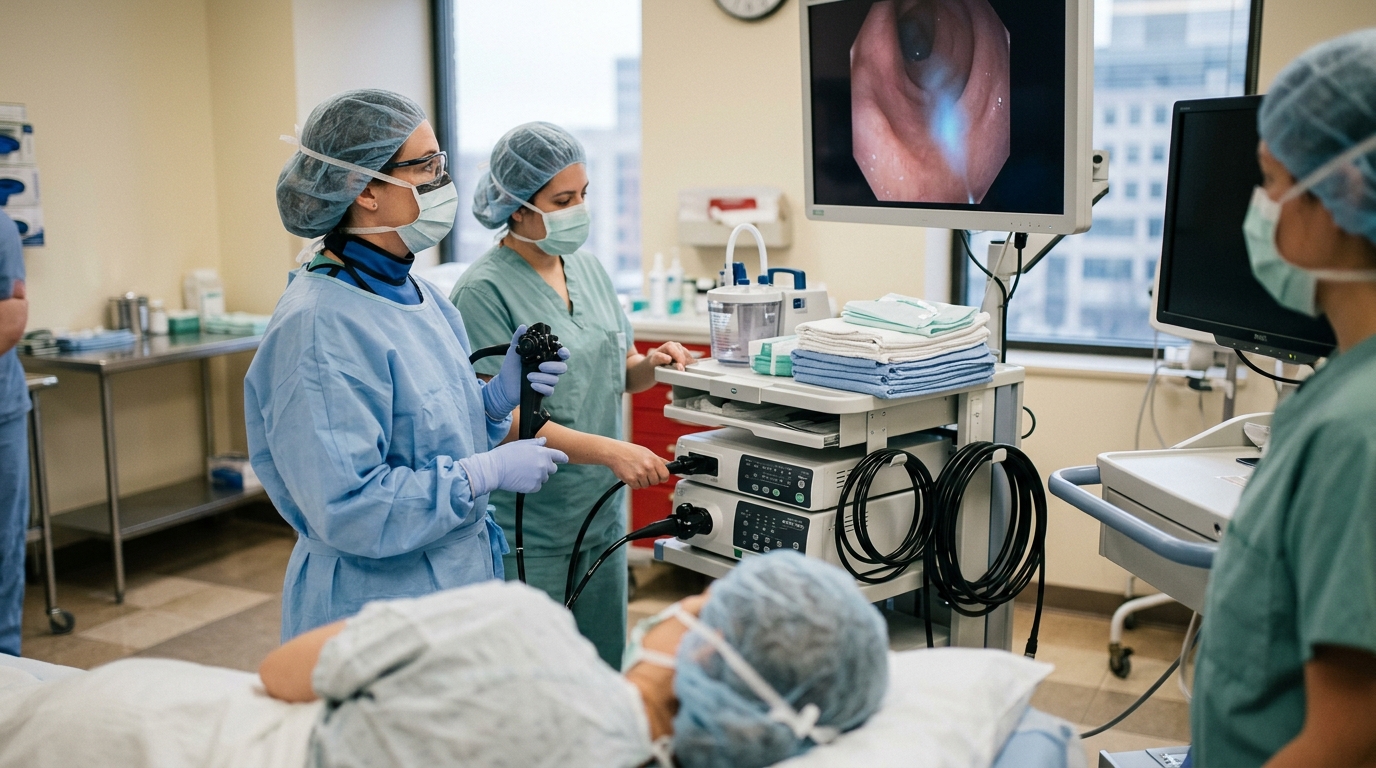
The prep takes longer than the exam itself — here's the clear-liquid day, the sedation choice, the ride-home rule, and the symptoms that mean call now.
A colonoscopy (a camera exam of the rectum and large bowel) uses a flexible tube with a camera to look at the lining of your colon, and it can show irritated tissue, ulcers, polyps, and cancer (NIDDK, August 2023). It is done either to screen people without symptoms or to find the cause of symptoms, and the doctor can remove polyps during the same visit.
Most of the effort is the bowel prep at home. The procedure itself usually takes less than one hour (NIDDK, August 2023), and you go home the same day with someone else driving. Exact prep steps vary by facility, physician, and your other health conditions — follow the written instructions you are given.
Why This Procedure Is Done
There are two broad reasons your doctor may have ordered a colonoscopy.
Screening in people without symptoms. Screening for colorectal cancer is recommended starting at age 45 for people without health problems or risk factors that raise their chance of colorectal cancer (NIDDK, August 2023). The U.S. Preventive Services Task Force recommends screening adults aged 45 to 75, with the decision between ages 76 and 85 made on an individual basis (CDC, June 2026). For people who are not at increased risk, colonoscopy as a screening test is recommended every 10 years (CDC, June 2026). Intervals are shorter for some people — personal or family history, inflammatory bowel disease, and previous polyps all change the plan, and recommendations differ by guideline edition and by country.
Investigating symptoms. Doctors also use colonoscopy to find the cause of bleeding from the anus, changes in bowel movements such as diarrhea, abdominal pain, or unexplained weight loss (NIDDK, August 2023). None of those symptoms can be assumed to be minor without an evaluation.
Less invasive options that are sometimes used first. Other screening tests include virtual colonoscopy (CT colonography, a CT scan of the bowel), flexible sigmoidoscopy (a shorter scope exam of the lower colon), and stool tests (NIDDK, August 2023). One common stool test is the fecal immunochemical test, or FIT, which uses antibodies to detect blood in the stool and is done once a year (CDC, June 2026). The trade-off is important: if a stool test, flexible sigmoidoscopy, or CT colonography result is positive or abnormal, a colonoscopy is needed to complete the screening process (CDC, June 2026). Which test suits you is a conversation with your own clinician.
Recovery and Aftercare
Routine and expected
- You stay at the hospital or outpatient center for about 30 to 60 minutes after the procedure while sedatives or anesthesia wear off (NIDDK, August 2023).
- Bloating, gas, and cramping as the air leaves your bowel, usually easing over the first few hours.
- Grogginess, poor memory of the recovery room, and unsteadiness for the rest of the day. No driving, no work decisions, and no alcohol that day.
- Light bleeding from the anus is normal if the doctor removed polyps or performed a biopsy (NIDDK, August 2023).
- You should expect a full recovery and a return to your normal diet by the day after the colonoscopy (NIDDK, August 2023). If polyps were removed, your team may give you specific diet or activity instructions for a short period — follow theirs over any general advice.
- Results: the doctor usually tells you what was seen the same day; lab results on any polyp or biopsy take longer. Ask before you leave how and when you will get them, and who to call if you have not heard.
Not expected after a colonoscopy
- Severe or worsening abdominal pain rather than passing gas cramps.
- Fever.
- Bleeding that soaks through, keeps going, or starts up days later — delayed bleeding can occur up to 2 weeks after the procedure and may require treatment with a second colonoscopy (NIDDK, August 2023).
- Repeated vomiting, dizziness, or weakness.
Confirm your specific aftercare instructions with your own care team, since they vary by facility and by what was done during your exam.
Risks and When to Call Your Doctor
Routine side effects
- Gas, bloating, and mild cramping for several hours.
- A small amount of blood with the first bowel movements if polyps were removed or a biopsy taken (NIDDK, August 2023).
- Drowsiness and a sore throat or sore IV site, mainly on the day of the procedure.
Less common complications
Serious complications include perforation (a tear in the colon wall), bleeding, and reactions to sedation. According to NIDDK, citing a systematic review prepared for the U.S. Preventive Services Task Force and published in JAMA, a study of screening colonoscopies found perforation in about 3 out of every 10,000 procedures and bleeding in about 15 out of every 10,000 procedures. Your own risk depends on your age, your other conditions, and whether polyps were removed — ask your gastroenterologist what applies to you.
Call your doctor's office promptly
- Bloody bowel movements that do not get better, or fever (NIDDK, August 2023).
- Bleeding from the anus that returns in the two weeks after the procedure.
- Inability to pass gas or stool, or a belly that keeps swelling.
Call 911 or go to the emergency room
- Severe abdominal pain — this is the red-flag symptom that distinguishes a complication from the routine gas cramps most people feel. Severe abdominal pain, fever, bloody bowel movements that do not get better, bleeding from the anus that does not stop, dizziness, or weakness all mean you should seek medical care right away (NIDDK, August 2023).
- Fainting, chest pain, or trouble breathing.
If you are unsure which category you are in, call the number on your discharge paperwork — after-hours lines exist for exactly this.
Frequently asked questions
What if I can't finish the whole bowel prep?
Call the number on your prep instructions before the day of the procedure rather than deciding on your own. An incompletely cleaned colon can hide polyps and sometimes means the exam has to be repeated. Your team may have options such as a different product or a changed schedule, and any substitution is physician-directed.
Why can't I drive myself home if I feel fine?
Sedatives and anesthesia need time to wear off before driving, which is why a ride home must be arranged in advance (NIDDK, August 2023). Judgment and reaction time can be affected for hours even when you feel alert, and many centers will not start the procedure without an escort present. Rideshare alone is often not accepted — confirm your facility's rule when you book.
Will I feel the polyp removal?
No — you will not feel the polyp removal (NIDDK, August 2023). The lining of the colon does not sense cutting the way skin does, and you will be under either general anesthesia or conscious/moderate sedation, chosen with your provider in advance (Cleveland Clinic). Mild cramping afterward as trapped air passes is common.
Can I take my regular morning medicines on the day?
Ask the ordering provider at least a week ahead, naming every prescription, over-the-counter drug, and supplement you use. Blood thinners, diabetes medicines, and iron are the ones most often addressed separately. Whether to take anything with a sip of water on the morning of the exam is a physician-directed decision, not a general rule.
When will I need another one?
For people who do not have an increased risk of colorectal cancer, colonoscopy as a screening test is recommended every 10 years (CDC, June 2026). If polyps were found and removed, or you have a personal or family history or inflammatory bowel disease, the interval is usually shorter and is set by your gastroenterologist. Recommended intervals also differ between guideline editions and between countries, so go by the date in your own discharge summary.
How much will this cost me?
That depends on your insurer, your plan, the facility, and whether the exam is billed as screening or diagnostic — which can change if a polyp is removed. Ask the ordering practice's billing office and your insurer for a written estimate before the date. Do not rely on general information for this.