Wellness Lantern

Recovery After Knee Replacement: What to Expect Week by Week

From the recovery room to the first cane, driving, and the leg symptoms that mean a phone call rather than a wait-and-see — laid out interval by interval.

Table of contents
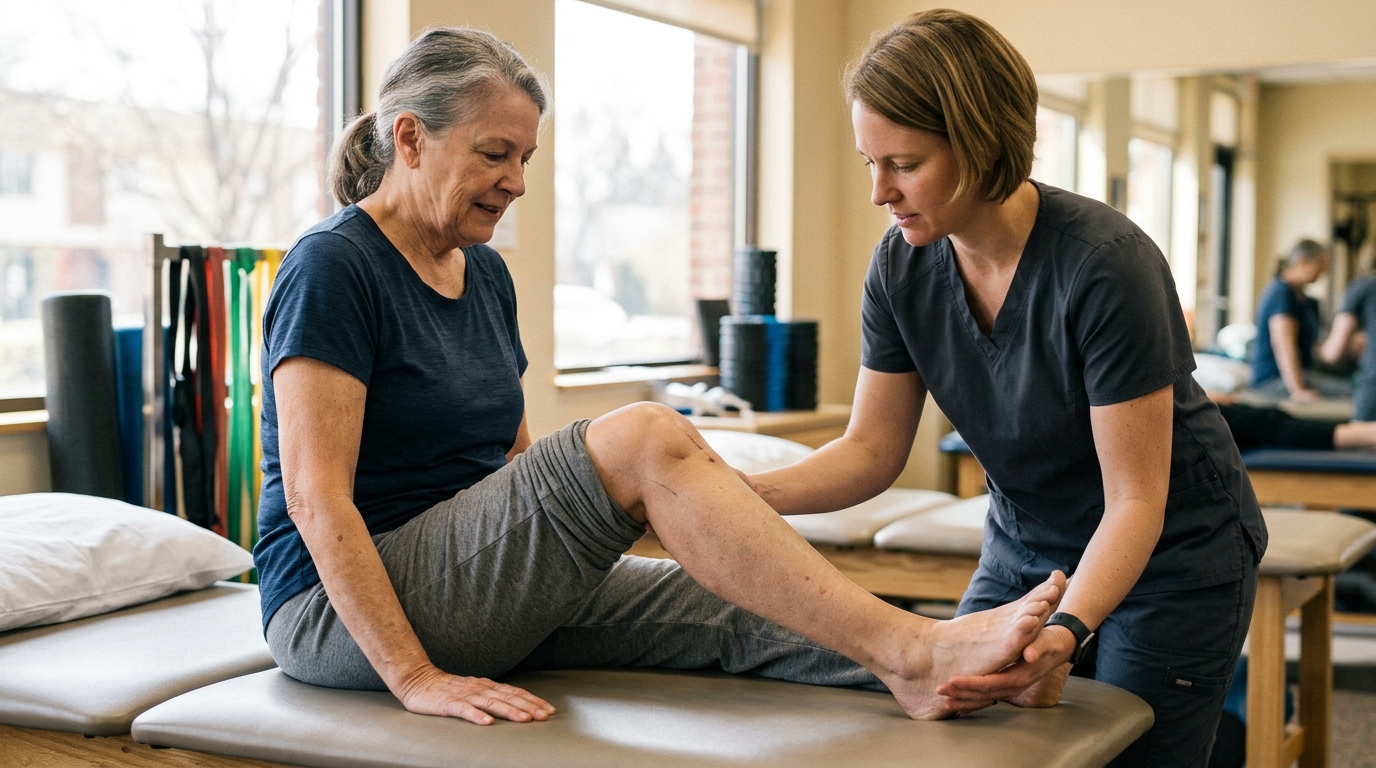
Featured image for "Recovery After Knee Replacement: What to Expect Week by Week"

A total knee replacement (total knee arthroplasty, the operation most people just call a knee replacement) has a long tail. Walking usually starts within a day, but full recovery after total knee replacement takes 4 months to a year, according to MedlinePlus (NIH/National Library of Medicine), and most people resume their usual activities well before that point.

This guide walks through what the first hours look like, what each stretch of weeks typically brings for walking aids, work, driving and exercise, and which symptoms are expected versus which ones need a call or an emergency room. Your surgeon's own protocol comes first — timelines vary by age, other health conditions, the type of implant and how the surgery went.

Immediately After the Procedure

You wake up in a recovery room and stay there for several hours while your recovery from anesthesia is monitored, after which you are taken to a hospital room or discharged home (American Academy of Orthopaedic Surgeons/OrthoInfo, November 2023). Knee replacement is usually done under general anesthesia or under spinal/regional anesthesia combined with moderate (conscious) sedation, and which one you had changes how quickly you feel clear-headed.

In those first hours, staff check your blood pressure, pulse, breathing and oxygen level, look at the dressing on your knee, and check the circulation, feeling and movement in your foot and ankle. You will be asked to rate your pain, and a nurse or physical therapist will usually get you standing or taking a few steps with a walker on the day of surgery or the morning after. Pain control often combines acetaminophen (Tylenol) with a short course of an opioid such as oxycodone (OxyContin, also found in Percocet), plus a clot-prevention medicine such as enoxaparin (Lovenox) or aspirin — which medicines, how much and for how long are decided by your surgeon.

Before you go home, most teams want to see stable vital signs, pain controlled on oral medicine, the ability to urinate, a dry or minimally draining dressing, and safe walking and stair work with a walker or crutches as judged by physical therapy. You may go home the same day or stay in the hospital for 1 to 2 days while recovering from anesthesia and surgery (MedlinePlus); the AAOS figure reported by Medical News Today is a stay of 1 to 4 days.

If you had general anesthesia or moderate (conscious) sedation, you cannot drive yourself home. A responsible adult must drive you, and most facilities also require someone to stay with you for the first 24 hours after discharge. Line that person up at least 24 hours before your surgery date — surgery is commonly cancelled when no driver is available. Confirm your own hospital's exact discharge and escort rules with your care team, because they differ by facility.

Recovery Timeline

These are typical patterns after total knee replacement, not promises. Your surgeon and physical therapist set your actual restrictions.

Days 1–3 - Walking short distances with a walker or crutches, usually starting the day of surgery or the next day, with weight-bearing as your surgeon directs. - Physical therapy begins in hospital or at home: ankle pumps, straight-leg raises, bending and straightening drills. - Work: none. Driving: none. Exercise: only the prescribed knee exercises, with ice and elevation between sessions.

Week 1 - Home with a walker or crutches; swelling and bruising peak; sleep is often broken. - Dressing care and bathing rules come from your surgeon — many allow showering once the dressing is water-resistant or the wound is sealed. - Work: desk or remote work in short blocks only if your surgeon agrees. Driving: no, and never while taking opioid pain medicine (UMass Memorial Health). Exercise: home program plus short, frequent walks indoors.

Weeks 2–4 - Staples or sutures usually come out in this window; outpatient or home physical therapy continues. - A single crutch or cane can often be started about 2 to 3 weeks after surgery, once you can walk and stand for more than 10 minutes without leaning weight on the walker or crutches (AAOS/OrthoInfo, October 2025). - Work: light or seated work is realistic for some people. Driving: usually still not cleared. Exercise: walking distance increases, plus stationary cycling if your surgeon approves.

Weeks 4–6 - A walker or crutches are typically used until a surgeon or physical therapist says it is okay to stop, often around 4 to 6 weeks after surgery (MedlinePlus). - Knee exercises with light ankle weights for resistance usually can begin 4 to 6 weeks after surgery (AAOS/OrthoInfo, October 2025). - Work: a few days to several months is the range for returning to work, depending on the type of job, according to AAOS figures reported by Medical News Today. Driving: most people can start driving about 6 weeks after surgery, and should not drive while taking opioid pain medicine (UMass Memorial Health). Exercise: walking, cycling and pool work once the incision is fully healed and your surgeon clears it.

Weeks 6–12 - Many people return to their usual activities 3 to 6 weeks after surgery according to AAOS figures reported by Medical News Today, and Cleveland Clinic notes most people resume most usual activities in about six weeks. - An average of 115° of knee motion is generally anticipated after total knee replacement (AAOS/OrthoInfo, November 2023). - Work: most desk and many light manual roles; heavy lifting, climbing or kneeling work needs specific clearance. Driving: usually unrestricted once cleared and off opioids. Exercise: strength work progresses; high-impact running and jumping only if your surgeon permits.

Months 3–12 - Full recovery takes 4 months to a year (MedlinePlus); Cleveland Clinic similarly describes about a year to recover fully. - Mild swelling in the knee or ankle and some redness and warmth around the incision can be normal for 3 to 6 months after surgery (Healthline), and occasional redness or warmth around the knee can be expected for up to 1 year (American Association of Hip and Knee Surgeons). - Work, driving and exercise: typically back to baseline, with sport-specific and kneeling activities cleared individually. Ask your own surgeon which activities they want you to avoid permanently.

Normal vs. Concerning Recovery Signs

Expected after knee replacementCall your care team the same dayCall 911 or go to the ER now
Mild swelling in the knee or ankle for 3 to 6 months (Healthline)Swelling that increases unexplainably or rapidly (American Association of Hip and Knee Surgeons)Sudden chest pain or discomfort, or difficulty breathing — possible pulmonary embolism (CDC, March 2025)
Some redness and warmth around the incision, occasionally for up to a year (Healthline; AAHKS)Spreading redness, warmth or swelling around the incision, or yellowish discharge (UF Health)Coughing up blood, fainting, lightheadedness or a fast or irregular heartbeat (CDC, March 2025)
Bruising down the shin and calf that fades over weeksCalf or thigh swelling, pain or tenderness, warmth, and redness or discoloration in the leg — possible deep vein thrombosis, see a doctor as soon as possible (CDC, March 2025)Heavy bleeding from the incision that does not slow with firm pressure
Pain with physical therapy that settles with rest, ice and prescribed medicinePain that is increasing rather than easing week to week (OrthoCarolina)A fall onto the operated knee with new deformity, a pop, or inability to bear any weight
Low energy, poor sleep and appetite changes in the first weeksTemperature higher than 101°F (38.3°C), or a fever above 100°F (37.8°C) with chills (UF Health; Healthline)Confusion, chest congestion with severe shortness of breath, or collapse

Serious complications such as a knee joint infection occur in fewer than 2% of total knee replacement patients (AAOS/OrthoInfo, November 2023), and the American Association of Hip and Knee Surgeons puts average infection risk at 1–2%. Uncommon is not the same as impossible — report the signs above rather than waiting for your next appointment, and confirm your surgeon's own thresholds, since some teams use different fever cut-offs.

When to Call Your Doctor

Follow the written discharge instructions from your own surgeon and facility first — the numbers below are general and your team's thresholds take priority. Call the number on your discharge paperwork for:

  • A temperature higher than 101°F (38.3°C), or a fever above 100°F (37.8°C) with chills (UF Health; Healthline).
  • Blood soaking through the dressing that does not stop with firm, steady pressure (UF Health).
  • Yellowish discharge, or new redness or swelling around the incision (UF Health).
  • Pain, tenderness, warmth, swelling or discoloration in the calf, thigh or either leg — common signs of deep vein thrombosis, which should be seen by a doctor as soon as possible (CDC, March 2025).
  • An unexplained or rapid increase in knee swelling, or redness and warmth that worsens instead of settling (American Association of Hip and Knee Surgeons).
  • Pain that climbs week over week instead of easing, or new inability to bear weight on the leg.
  • Knee bending or straightening that is going backwards between physical therapy visits.
  • Vomiting, constipation lasting several days, or a rash while taking prescribed pain or clot-prevention medicine — dosing and timing are physician-directed, so do not change anything on your own.

Call 911 or go to the emergency department for chest pain or discomfort, difficulty breathing, coughing up blood, a fast or irregular heartbeat, or fainting and lightheadedness — these can be signs of pulmonary embolism and need immediate medical help (CDC, March 2025).

Frequently asked questions

When can I drive again after knee replacement?

Most people can start driving about 6 weeks after total knee replacement surgery, and should not drive while taking opioid pain medicine (UMass Memorial Health). Timing differs for a left versus right knee and for automatic versus manual transmission. Your surgeon decides when you are cleared, usually after checking that you can brake with control and are off opioids. Check your auto insurer's and state's rules too if you are unsure.

Can I shower, and when?

Showering rules depend on your dressing type and your surgeon's protocol, so follow your discharge sheet exactly. Many teams allow showering once a water-resistant dressing is in place or the incision is sealed and dry, while soaking in a bath, pool or hot tub is held much longer. Do not scrub the incision or apply lotions or ointments unless your surgeon says to.

When can I go back to work?

It may take a few days to several months to return to work after total knee replacement, depending on the type of job, according to AAOS figures reported by Medical News Today. Seated and remote roles often resume in the first few weeks; jobs involving ladders, kneeling, prolonged standing or heavy lifting take far longer. Ask your surgeon for written restrictions you can give your employer.

When can I walk for exercise or use a stationary bike?

Short indoor walks begin in the first days with a walker or crutches, and distance builds as you move to a single cane or crutch around 2 to 3 weeks (AAOS/OrthoInfo, October 2025). Stationary cycling and light ankle-weight resistance exercises usually start 4 to 6 weeks after surgery (AAOS/OrthoInfo, October 2025). Higher-impact activity such as running or singles tennis needs individual clearance from your surgeon.

Sources

  1. MedlinePlus (NIH/National Library of Medicine)Knee joint replacement
  2. American Academy of Orthopaedic Surgeons (AAOS) / OrthoInfoTotal Knee Replacement2023-11

Written by

Priya Chandrasekaran

Priya covers food as it's actually eaten, not as it appears in meal-plan fantasies. She writes with a skepticism toward quick fixes and a soft spot for the boring, repeatable choices that add up over years.